Border privet is a shrub that may grow to be 20 ft. tall. It forms dense thickets, shading out native plants. It also displaces native shrubs and seedlings in regenerating forests. In Pennsylvania, Japanese privet, Ligustrum japonicum, Chinese privet, L. sinense, and European privet, L. vulgare are also classified as noxious weeds. (Penn State Extension)
The Scary Invasive Plants of Montgomery Township
Imagine the destructive vines of an oriental bittersweet sucking the life out of a once-thriving oak tree, or burning bush strangling a large section of once-plentiful wildflowers. When native plant species decline, local insects begin to starve, the bird population becomes threatened with collapse, and the impact continues all the way up the food chain. Soil erosion and decreases in overall water quality are also associated with native plant population decline, in addition to many other serious negative environmental consequences. This devastation is caused by invasive plants, many of which are currently wreaking havoc in our own backyards.
According to the U.S. Department of Agriculture, an invasive plant is defined as a species that is non-native to the ecosystem and whose introduction causes or is likely to cause economic or environmental harm or harm to human health. These plants produce large quantities of seeds and have aggressive root systems. The Pennsylvania Department of Agriculture regularly publishes a list of invasive plants it calls “noxious weeds”, which are considered a threat to public health, crops, livestock, agricultural land or other property. These plants are forbidden from being sold, propagated, or intentionally planted in the commonwealth
In late September, fellow EAC member Andy Mehrota and I took a stroll around the township and identified a few of the scary invasive plants that have taken up residence. All of the plants featured below are considered “noxious” weeds in Pennsylvania and represent only a fraction of what can be found in the area. To be the hero in this horror story, consider researching how to properly remove the invasive plants from your yard and take swift action…. Before it’s too late!
Invasives at Mont CRC
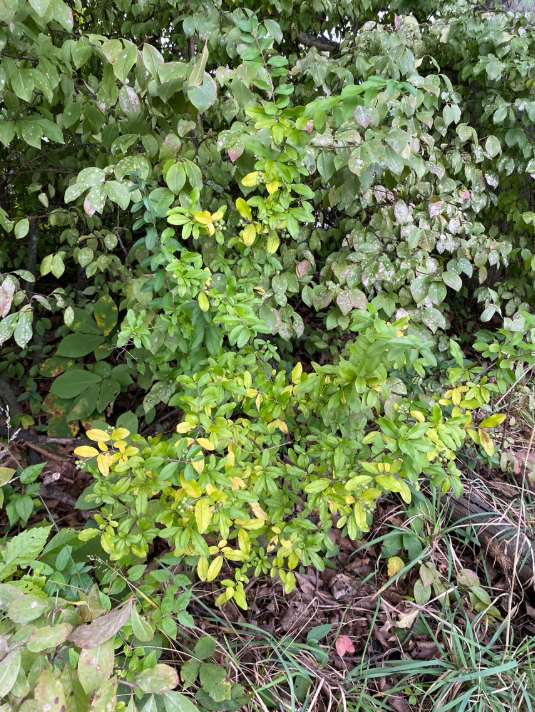
Border Privet
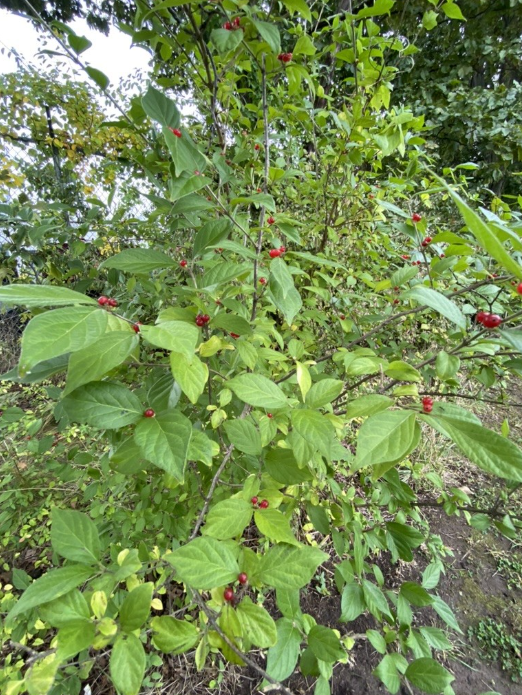
Morrow's Honeysuckle
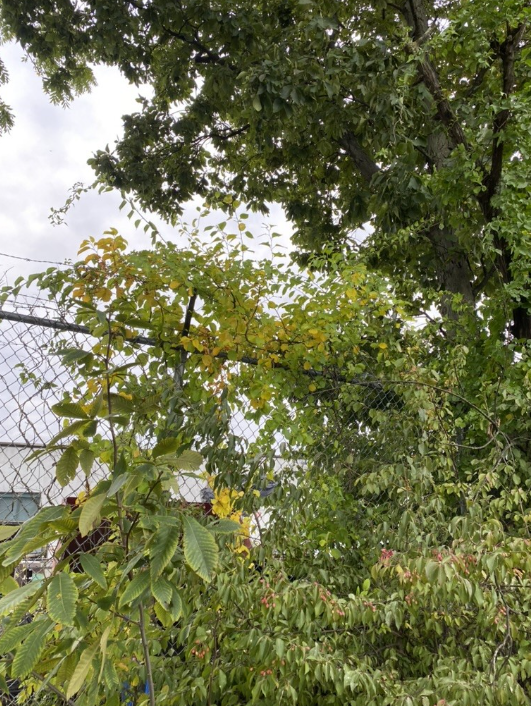
Oriental Bittersweet
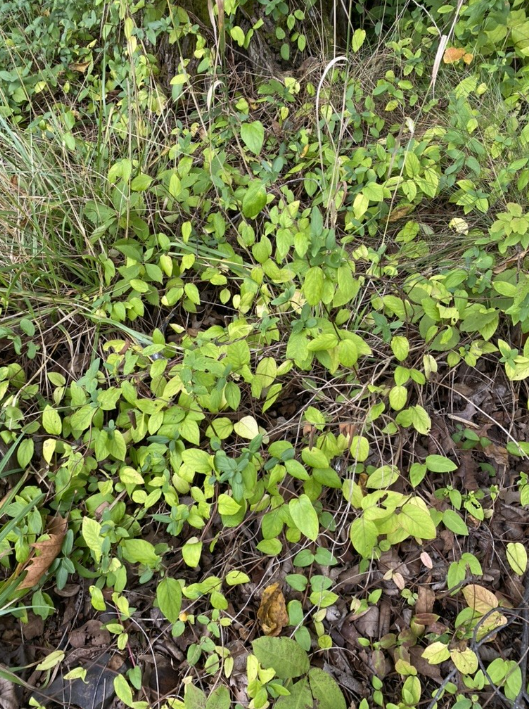
Japanese Honeysuckle
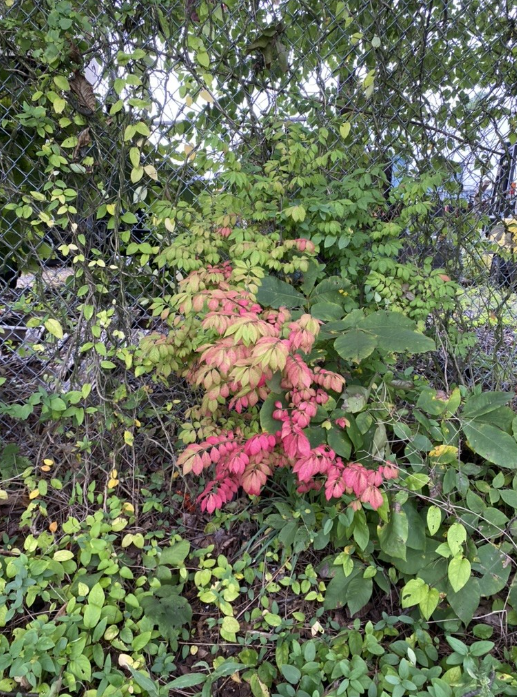
Burning Bush
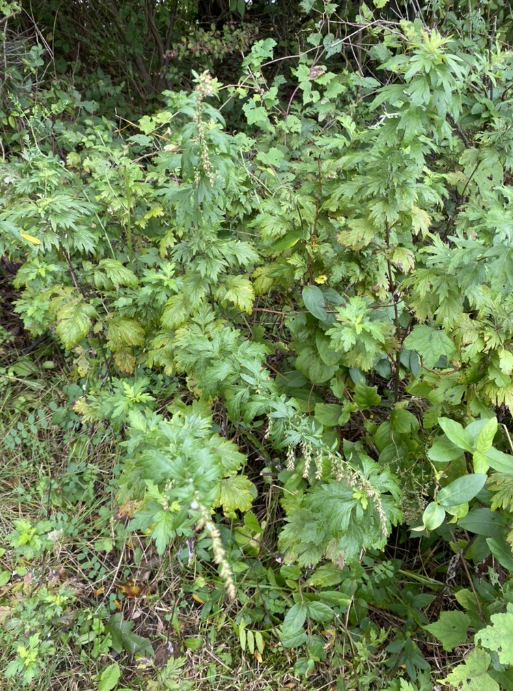
Mugwort
Border privet - Ligustrum obtusifolium
Morrow’s honeysuckle - Lonicera morrowii
Morrow’s honeysuckle is a type of bush honeysuckle. The term “bush” or “shrub” honeysuckle refers to several different species of non-native invasive honeysuckle. In addition to Morrow’s, Amur (Lonicera maackii), Bells (L. x bella), Standish, (L. standishii), and Tatarian (L. tatarica) are also considered noxious weeds in Pennsylvania. Bush honeysuckles can be found growing along roadsides, property borders, in forest openings, abandoned agricultural fields, and other locations where there is a lot of sunlight. (Western PA Conservancy)
Oriental bittersweet - Celastrus orbiculatus
This plant was introduced to the United States in the 1860s from East Asia. It chokes out desirable native plants by smothering them with its dense foliage and strangling stems and trunks. In some areas, it forms nearly continuous blankets along entire stretches of woodlands. It is known for its aggressive nature and capacity to replace native plant life. (Penn State Extension)
Japanese Honeysuckle - Lonicera japonica
Like many invasive species, Japanese honeysuckle likes to grow along the edge of wooded areas or paths. This plant reproduces by seed or from the runners that can root at the node. Growth is aggressive, and the plant will climb over other desirable plant material. (Penn State Extension)
Burning Bush - Euonymus alatus
Burning bush is a very popular landscape shrub, despite the plant’s status as an invasive species. Though not as aggressive as other invasive shrubs, its ability to grow under a mature canopy and plentiful fruiting make it a shrub of enough concern to be ranked a "significant threat" by the Pennsylvania Department of Conservation and Natural Resources. (Penn State Extension)
Mugwort is an herbaceous (not woody) spreading, invasive plant. The leaves are deeply dissected, similar to ragweed, but strongly scented like chrysanthemum. It can grow to a height of 4 feet and is very difficult to control. (University of Maryland)
Blog written by Jamie Pizzi
Have questions about this blog post? Contact the EAC with the email link below.

Sign up to our News and Notices
Stay up to date on the Township's activities, events, programs and operations by subscribing to our News and Notices.